Massachusetts Notary Solutions for Middlesex & Greater Boston Areas

Why Do Some Documents Require a Notary Public?
Learn why some documents require a notary public, how notarization prevents fraud, common misconceptions, legal rules in Massachusetts, and what to do next.
12/16/20252 min read
Why Do Some Documents Require a Notary Public?
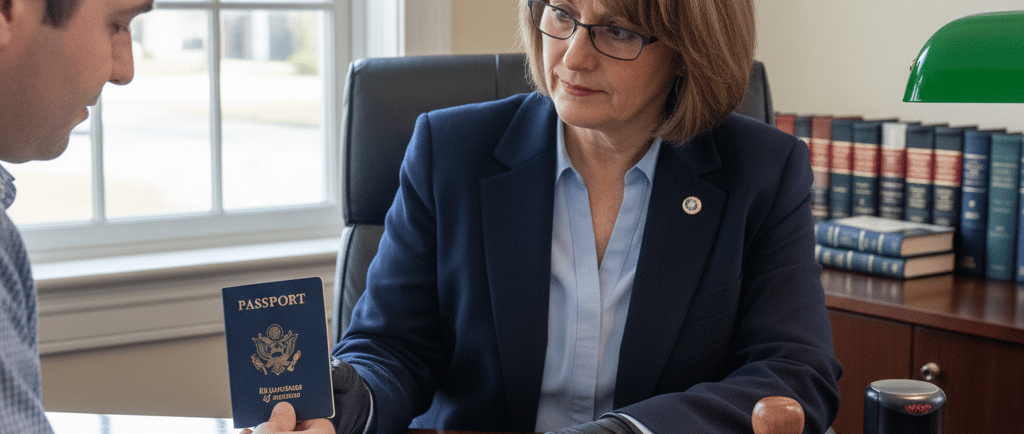
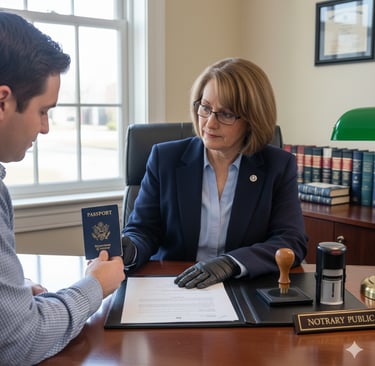
Some documents require a Notary Public because they involve legal rights, financial obligations, or serious personal decisions that must be protected against fraud. A notary provides independent verification that the person signing the document is identified correctly, understands what they are signing, and is signing voluntarily.
People ask this question because notarization often feels unnecessary or confusing. Many documents look simple, yet still require a notary. People want to know why a signature alone is not enough, especially when signing something for a bank, court, employer, or government agency.
A common misconception is that notarization makes a document legally stronger or guarantees its accuracy. In reality, a notary does not validate the content of a document. Another misconception is that notarization is optional. If a document explicitly requires notarization and it is not notarized correctly, it can be rejected, delayed, or declared invalid. Some also believe notarization is only needed for large transactions, but even simple affidavits or consent forms may legally require it.
The legal purpose of notarization is to prevent fraud. Massachusetts law requires notarization for certain documents because they may be relied upon by courts, financial institutions, or government agencies that cannot personally verify the signer's identity. The notary serves as a neutral witness who verifies identity with acceptable government-issued photo identification, confirms the signer's presence, and completes the proper notarial act, such as an acknowledgment or jurat.
Documents that commonly require notarization include real estate deeds, powers of attorney, affidavits, sworn statements, court filings, parental consent forms, and documents used internationally. In many cases, notarization is required to record, file, or enforce the document.
From a practical standpoint, notarization creates trust. It allows third parties to rely on documents without needing to track down the signer. This is especially important when documents travel across states or countries, or when they may be challenged later.
If you are asked to notarize a document, the next step is to confirm the exact type of notarization required and to ensure all signers appear with valid identification. If the document will be used outside the United States, you may also need an apostille after notarization. Working with an experienced Massachusetts notary helps avoid errors that could lead to rejection or delays.
Disclaimer:
Middlesex Notary and its representatives are not attorneys and are not licensed to practice law in the Commonwealth of Massachusetts or any other jurisdiction. We do not provide legal advice, interpret documents, or assist in completing legal forms beyond the duties permitted by Massachusetts notary law. If you require legal guidance, document preparation, or advice regarding the content or effect of a document, please consult with a qualified attorney. All notarial acts performed by Middlesex Notary are limited to verifying the identity of signers, witnessing signatures, and completing authorized notarial certificates in accordance with Massachusetts General Laws, Chapter 222.
© 2026 Middlesex Notary. All rights reserved. Unauthorized use or reproduction of this content is strictly prohibited.
Document mailing address
335 Washington St #1127 Woburn, MA 01801 United States
Middlesex Notary Co provides trusted mobile notary services, apostille certification, printing and certified mailing, and faxing services across Middlesex County and Greater Boston. Whether you’re searching for a notary near me, need documents notarized fast, or want assistance with Massachusetts apostille processing, we deliver professional support right to your door.
Learn more about our services:
Mobile Notary | Apostille | Printing & Mailing | Faxing | Contact Us
Office location
500 W Cummings Park #4500, Woburn, MA 01801, United States