Massachusetts Notary Solutions for Middlesex & Greater Boston Areas

What Makes a Notarization Legally Valid?
Learn what makes a notarization legally valid in Massachusetts, required steps, common mistakes, and how to ensure your document is accepted the first time.
12/16/20252 min read
What Makes a Notarization Legally Valid?
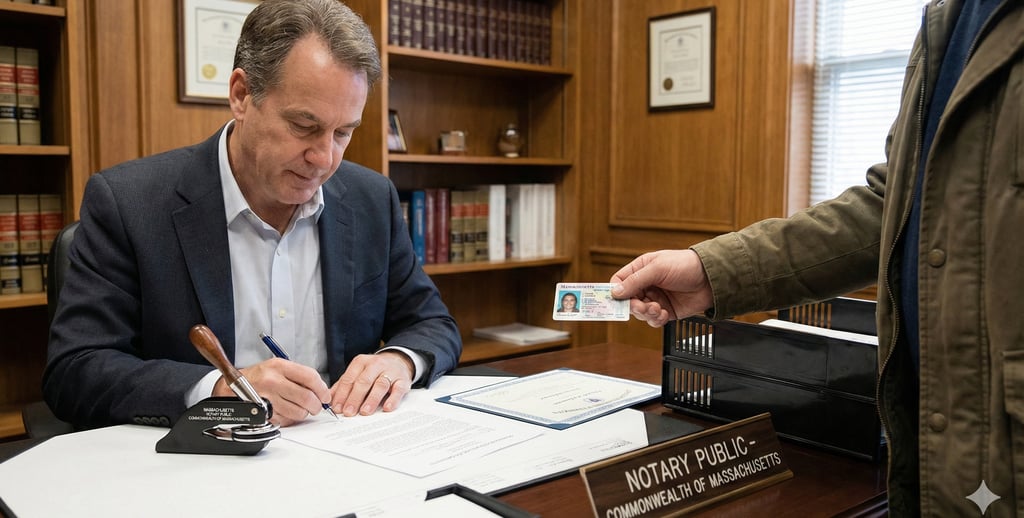
A notarization is legally valid when all required steps under Massachusetts law are followed correctly at the time the document is signed. A notary public does not simply stamp a document. The notarization must meet specific legal requirements to be recognized by courts, government agencies, and third parties.
People ask this question after a document is rejected or questioned. Many assume that a stamp and signature are sufficient. In reality, missing even one required element can make a notarization invalid and unusable.
Required Elements of a Valid Notarization
A legally valid notarization in Massachusetts requires the signer to appear in person before the notary. The signer must present acceptable government-issued photo identification that reasonably matches the name on the document.
The notary must confirm the signer is acting willingly and appears to understand what they are signing. The signer must sign the document in the notary’s presence or acknowledge that the signature was made voluntarily.
The notary must complete the correct notarial act. This usually means an acknowledgment or a jurat. For affidavits, the notary must administer an oath or affirmation. The notary must then complete the notarial certificate with accurate information, affix their official stamp, and sign as a commissioned officer.
Proper Notarial Certificate and Stamp Use
A notarization is not valid without a properly completed notarial certificate. The certificate must match the notarial act performed and include the venue, date, the signer's name, the notary's signature, and the commission details, as required by Massachusetts law.
The notary stamp must be clear, legible, and contain all required information. Smudged, incomplete, or missing stamps can lead to rejection. The notary may also record the notarization in a notary journal when maintained, which helps support the validity of the act if it is ever questioned.
Common Mistakes That Invalidate Notarization
Common mistakes include notarizing without the signer present, accepting expired or insufficient identification, notarizing incomplete documents, using the wrong notarial certificate, or failing to administer an oath when required.
Another frequent issue is name mismatches between the ID and the document. Any discrepancy should be resolved before notarization. Changes made after notarization can also invalidate the document.
What You Should Do Before Seeing a Notary
Before meeting with a notary, complete your document fully and review it for accuracy. Confirm what type of notarization is required by the receiving party. Bring valid identification and ensure all signers are present.
If the document is for the RMV, a court, or international use, working with a notary experienced in those areas helps prevent rejection and delays. A legally valid notarization protects your document and ensures it will be accepted where it matters.
Disclaimer:
Middlesex Notary and its representatives are not attorneys and are not licensed to practice law in the Commonwealth of Massachusetts or any other jurisdiction. We do not provide legal advice, interpret documents, or assist in completing legal forms beyond the duties permitted by Massachusetts notary law. If you require legal guidance, document preparation, or advice regarding the content or effect of a document, please consult with a qualified attorney. All notarial acts performed by Middlesex Notary are limited to verifying the identity of signers, witnessing signatures, and completing authorized notarial certificates in accordance with Massachusetts General Laws, Chapter 222.
© 2026 Middlesex Notary. All rights reserved. Unauthorized use or reproduction of this content is strictly prohibited.
Document mailing address
335 Washington St #1127 Woburn, MA 01801 United States
Middlesex Notary Co provides trusted mobile notary services, apostille certification, printing and certified mailing, and faxing services across Middlesex County and Greater Boston. Whether you’re searching for a notary near me, need documents notarized fast, or want assistance with Massachusetts apostille processing, we deliver professional support right to your door.
Learn more about our services:
Mobile Notary | Apostille | Printing & Mailing | Faxing | Contact Us
Office location
500 W Cummings Park #4500, Woburn, MA 01801, United States