Massachusetts Notary Solutions for Middlesex & Greater Boston Areas

Is a Notary Public Responsible for the Content of a Document?
Learn whether a notary public is responsible for the content of a document, what notaries do and do not verify, common misconceptions, and Massachusetts notary rules.
12/16/20252 min read
Is a Notary Public Responsible for the Content of a Document?
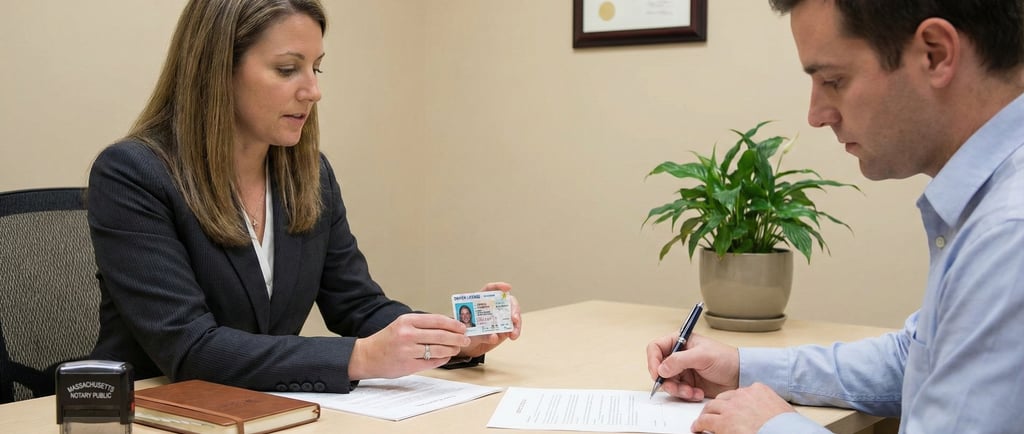
No. A Notary Public is not responsible for the content of a document. In Massachusetts, a notary’s role is limited to verifying identity, witnessing signatures, and performing the required notarial act. The notary does not review, approve, validate, or take responsibility for the document's contents.
People often ask this question because notarization is commonly associated with legal or official documents. When something goes wrong later, many people assume the notary shares responsibility. This misunderstanding creates confusion about what a notary does and what the signer is legally responsible for.
What a Notary Public Is Legally Responsible For
A Massachusetts Notary Public is responsible only for the notarial act itself. This includes confirming the signer’s identity with acceptable government-issued photo identification, ensuring the signer appears in person, determining that the signer is acting voluntarily, and completing the correct notarial certificate.
If the document is an affidavit, the notary must administer an oath or affirmation. If it is an acknowledgment, the notary must confirm that the signer voluntarily signed the document. The notary must also complete the certificate accurately and affix their stamp in accordance with Massachusetts law.
The notary is responsible for following proper procedures. They are not responsible for whether the document is truthful, legally enforceable, or properly drafted.
What a Notary Public Is NOT Responsible For
A notary is not responsible for the accuracy of the information in the document. They do not verify facts, confirm statements, or investigate claims made by the signer. If a document contains false information, the responsibility lies entirely with the person who signed it.
A notary is also not responsible for explaining the document or advising the signer on what to write. In Massachusetts, notaries who are not attorneys are prohibited from providing legal advice or assistingin the preparation oof documents The notary cannot decide whether the document is correct, fair, or appropriate for its intended use.
Another common misconception is that notarization guarantees a document will be accepted. Acceptance depends on the receiving agency, court, or institution, not the notary.
Why This Rule Exists Under Massachusetts Law
Massachusetts law limits a notary’s role to prevent conflicts of interest and protect the public. A notary acts as an impartial witness, not as a legal reviewer or advisor. If notaries were responsible for document content, they would effectively be practicing law without a license.
This separation ensures that responsibility remains clear. The signer is accountable for the content. The notary is responsible only for the notarization process.
What You Should Do Before Seeing a Notary
Before meeting with a notary, ensure your document is complete and accurate. Do not expect the notary to review or correct it. If you have questions about what the document should say, contact the issuing agency, an attorney, or the organization requesting the notarization.
Bring valid identification that matches the signer's name on the document, and be prepared to sign in the notary’s presence. If the document is an affidavit, be ready to swear or affirm that the contents are accurate.
Understanding these roles helps avoid delays, rejected documents, and unnecessary disputes.
Disclaimer:
Middlesex Notary and its representatives are not attorneys and are not licensed to practice law in the Commonwealth of Massachusetts or any other jurisdiction. We do not provide legal advice, interpret documents, or assist in completing legal forms beyond the duties permitted by Massachusetts notary law. If you require legal guidance, document preparation, or advice regarding the content or effect of a document, please consult with a qualified attorney. All notarial acts performed by Middlesex Notary are limited to verifying the identity of signers, witnessing signatures, and completing authorized notarial certificates in accordance with Massachusetts General Laws, Chapter 222.
© 2026 Middlesex Notary. All rights reserved. Unauthorized use or reproduction of this content is strictly prohibited.
Document mailing address
335 Washington St #1127 Woburn, MA 01801 United States
Middlesex Notary Co provides trusted mobile notary services, apostille certification, printing and certified mailing, and faxing services across Middlesex County and Greater Boston. Whether you’re searching for a notary near me, need documents notarized fast, or want assistance with Massachusetts apostille processing, we deliver professional support right to your door.
Learn more about our services:
Mobile Notary | Apostille | Printing & Mailing | Faxing | Contact Us
Office location
500 W Cummings Park #4500, Woburn, MA 01801, United States