Massachusetts Notary Solutions for Middlesex & Greater Boston Areas

Can a Notary Public Notarize for a Family Member?
Learn whether a notary public can notarize for a family member in Massachusetts, legal limits, conflicts of interest, and best practices.
12/16/20251 min read
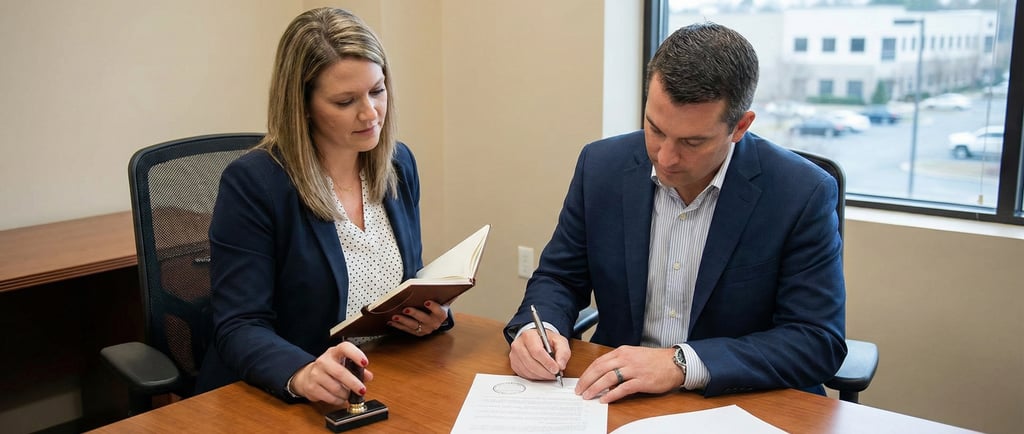
Can a Notary Public Notarize for a Family Member?
In Massachusetts, a Notary Public should not notarize documents for a family member if doing so creates a conflict of interest or compromises impartiality. While state law requires that a notary have no direct financial or beneficial interest in the transaction, notarizing for close family members is strongly discouraged and may render the notarization invalid.
People ask this question because family members often turn to a trusted notary. It feels convenient and harmless, especially for simple documents. However, notarization requires strict neutrality, and family relationships can raise questions about bias.
What Massachusetts Law Requires
Massachusetts law requires a notary to act as an impartial witness. A notary may not notarize a document if they are a party to the transaction or if they have a direct financial or beneficial interest in it.
If the document benefits a spouse, child, parent, or other close relative, notary’s impartiality can reasonably be questioned. Even if no money changes hands, the appearance of bias can lead to a notarization being challenged or rejected.
When Notarizing for Family Is Not Allowed
A notary cannot notarize their own signature or any document in which they are named. A notary cannot notarize a document in which they stand to gain personally or financially.
Documents involving real estate transfers, powers of attorney, wills, or affidavits connected to family matters are especially sensitive. In these situations, notarizing for a family member is unlikely to be accepted or may create legal issues.
Best Practice to Avoid Problems
The safest approach is to avoid notarizing for family members altogether. Using an unrelated notary removes any doubt about impartiality and protects the document's validity.
Many banks, law offices, and mobile notaries offer quick notarization services. This small extra step helps ensure the document is accepted without question.
What to Do Instead
If a family member needs a document notarized, refer them to another notary. This protects both the signer and the notary from disputes or allegations of improper notarization.
Understanding and respecting impartiality rules ensures your notarizations remain legally valid and trusted.
Disclaimer:
Middlesex Notary and its representatives are not attorneys and are not licensed to practice law in the Commonwealth of Massachusetts or any other jurisdiction. We do not provide legal advice, interpret documents, or assist in completing legal forms beyond the duties permitted by Massachusetts notary law. If you require legal guidance, document preparation, or advice regarding the content or effect of a document, please consult with a qualified attorney. All notarial acts performed by Middlesex Notary are limited to verifying the identity of signers, witnessing signatures, and completing authorized notarial certificates in accordance with Massachusetts General Laws, Chapter 222.
© 2026 Middlesex Notary. All rights reserved. Unauthorized use or reproduction of this content is strictly prohibited.
Document mailing address
335 Washington St #1127 Woburn, MA 01801 United States
Middlesex Notary Co provides trusted mobile notary services, apostille certification, printing and certified mailing, and faxing services across Middlesex County and Greater Boston. Whether you’re searching for a notary near me, need documents notarized fast, or want assistance with Massachusetts apostille processing, we deliver professional support right to your door.
Learn more about our services:
Mobile Notary | Apostille | Printing & Mailing | Faxing | Contact Us
Office location
500 W Cummings Park #4500, Woburn, MA 01801, United States